
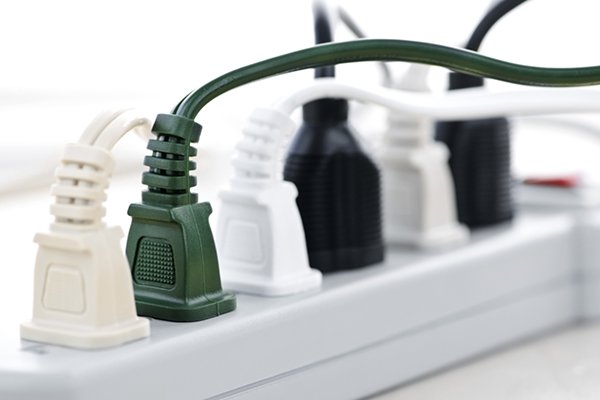
Why Quality Power Strips Can’t Be Dirt Cheap: Understanding the Real Cost of Safety and Certification

Rock-bottom prices look tempting—until a plug runs hot, a USB-C port fails, or customs flags the shipment for missing paperwork. With power strips, the cheapest option often costs you the most in rework, returns, and risk. Here’s what really drives price, and how I balance quality with budget without overpaying.
The Hidden Costs Behind Low-Priced Power Strips

The unit price you see isn’t the full story. Ultra-cheap strips usually “save” by removing things you can’t see on the shelf.
-
Undersized copper & cords1
Thinner conductors and short or under-rated leads increase voltage drop and temperature rise. -
Low-grade surge parts2
Smaller MOV3s (metal-oxide varistors), no thermal links, or poor PCB creepage/clearance shorten life and raise fire risk. -
Weak plastics & no flame rating
Housings without UL94 V-04 or equivalent materials deform, crack, or burn. -
Minimal quality control
Fewer plug-in cycles, no 100% hi-pot/earth-continuity tests, and inconsistent torque on terminals lead to intermittent faults. -
No safety files
Missing DoC5/DoP, test reports, or traceability6 means failed inspections and delays at the border. -
Shortcuts on features
No overload reset, flimsy switches, poor strain relief, narrow socket spacing, and noisy SMPS for USB.
Red flags of false economy
| Red Flag | What it means in practice |
|---|---|
| Vague rating (“max 2500W*”) with asterisks | Ambiguous current/temperature limits |
| No brand or factory traceability6 | Hard to claim warranty or recall |
| “CE” sticker only (no ID, no docs) | High chance of non-compliance in the EU/UK |
| Feather-light feel | Thinner copper, smaller MOV3s, less plastic and shielding |
Why Safety Standards and Certifications Add to the Price

Compliance isn’t a logo; it’s a process with real engineering and audit costs.
-
EU/UK: CE / UKCA + harmonised EN standards
EN 62368-1 / EN 60950-1 legacy, EN 61643 (surge), EN 60335 where applicable; DoC5, risk assessment, EMC7 (EN 55032/35), RoHS/REACH. -
US/Canada: UL/ETL
Safety evaluation, production line audits, and follow-up services. Adds PCB spacing rules, flame tests, strain-relief tests, temperature rise, abnormal operation. -
EMC7 & radio
If “smart”: FCC, RED (EU), conducted/radiated emissions, immunity. -
Materials & traceability6
Verified flame-retardant plastics, earthing hardware, certified cable (e.g., 14–16 AWG for US, 1.0–1.5 mm² for EU), child shutters (Europe). -
Reliability trials
Plug/unplug endurance, switch cycling, thermal rise at rated current, glow-wire (IEC 60695-2-11), surge hit tests.
All of that drives tooling, engineering time, pre-compliance prototypes, lab fees, factory audits, and on-going surveillance. It costs—but it’s also what keeps shipments moving and customers safe.
Long-Term Value: Durability, Reliability, and Lower Replacement Costs
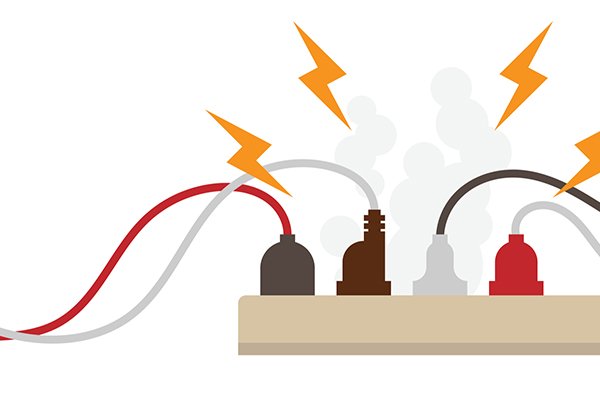
Cheap strips rarely stay cheap once you count the after-effects.
-
Fewer failures & returns
Better plastics, tighter terminals, proper MOV3/thermal links, and real overload breakers reduce warranty costs. -
Stable charging performance
Quality USB-C PD (30–100+ W) with PPS, E-marked cables, and EMI filtering8 prevents device throttling and customer complaints. -
Safety margin in real use
Cords that run cool at 80% continuous load, proper socket spacing for “fat” adapters, and secure strain relief. -
Brand protection
Passing customs and retailer audits first time keeps launch dates—and reputations—intact.
Pay-a-bit-more line items that save money later
| Upgrade | Why it’s worth it |
|---|---|
| Overload reset + thermal fuse9 | Prevents overheating and trips cleanly |
| MOV3 + thermal disconnect | Safer surge life; reduces catastrophic failure |
| UL94 V-04 housing | Self-extinguishing plastic improves safety |
| Wide socket spacing | Fewer blocked outlets, happier users |
| Properly rated cable & plug10 | Lower temperature rise, longer life |
How to Balance Quality and Budget When Sourcing Power Strips
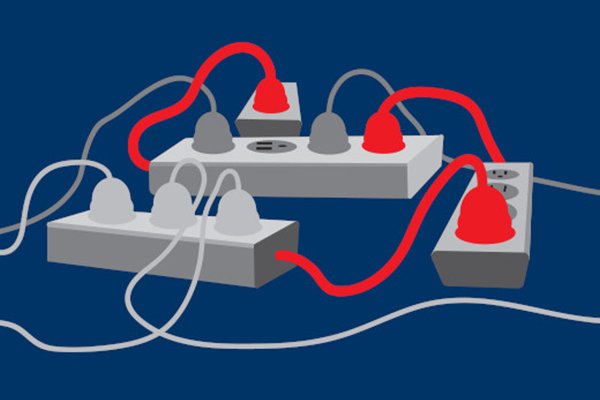
I don’t over-spec for sport. Here’s how I keep costs sane while staying safe and compliant.
-
Start with the market’s minimum viable safety
- EU/UK: CE/UKCA, EMC7, RoHS/REACH, child shutters, overload protection11.
- US: UL/ETL, FCC (if smart), 14–16 AWG cords.
These are non-negotiable.
-
Right-size the power & surge spec
- Home office: surge ≥1000 J, 6 outlets, 1.8 m cord.
- AV/gaming: wide spacing, higher joules, EMI/RFI filtering.
- Travel: compact, 100–240 V, fused plug, 2×USB-C PD (65 W shared).
Don’t pay for 140 W PD if your range tops out at tablets.
-
Trim what doesn’t add value
- Keep cord lengths realistic (1.5–1.8 m sells best; longer costs more).
- Choose one flat/angled plug style per market to simplify tooling.
- Standardise colours/finishes to increase batch size.
-
Modular BOM strategy
- Base chassis + optional surge board; add/remove USB-C PD modules by SKU.
- Shared plastics across EU/UK/US variants; market-specific plugs/leads.
-
Validate early, then scale
-
Demand transparent paperwork
Supplier scorecard (quick)
| Criterion | Pass mark |
|---|---|
| Recent CE/UKCA + UL/ETL projects | Test reports within 24 months |
| Materials & cable proofs | UL file numbers / CPR (EU) where relevant |
| Process quality | IQC/IPQC/OQC logs, torque records, hi-pot 100% |
| Surge & safety | MOV3 with thermal link, overload breaker, glow-wire |
| Documentation | DoC5, label art, packaging compliance, traceability6 |
Conclusion
Power strips carry real current in real homes. If a price looks impossibly low, it usually is—because something essential is missing. I buy (and build) to meet the standard, run cool, charge fast, and pass audits. Then I trim cost with smart modular design, right-sized specs, and standardised parts—not by gambling with safety.
If you want, I can turn this into a sourcing checklist or a spec sheet template tailored to your target markets and price bands.
-
Learn how the quality of copper and cords affects the performance and safety of power strips. ↩
-
Learn about surge parts to ensure your power strips can handle electrical surges effectively. ↩
-
Find out how MOVs safeguard your devices from voltage spikes and enhance power strip safety. ↩ ↩ ↩ ↩ ↩
-
Understanding UL94 V-0 certification can help you choose safer power strips that meet fire safety standards. ↩ ↩
-
Understanding DoC can help you verify the safety and compliance of your power strips. ↩ ↩ ↩ ↩
-
Learn how traceability ensures accountability and safety in the production of power strips. ↩ ↩ ↩ ↩
-
Explore the importance of EMC compliance to ensure your power strips operate safely in various environments. ↩ ↩ ↩ ↩
-
Discover how EMI filtering improves the performance of power strips and protects your devices. ↩
-
Discover how thermal fuses enhance safety in power strips by preventing overheating. ↩
-
Understanding the specifications of cables and plugs can help you select safer and more reliable power strips. ↩
-
Understanding overload protection can help you choose power strips that prevent electrical hazards. ↩