

Resistance of Insulating Material to Abnormal Heat and Fire in Power Strips
When it comes to power strips, safety is of utmost importance, especially regarding the materials used in their construction. One critical aspect is the resistance of insulating material to abnormal heat and fire. This feature ensures that the power strip remains safe even under conditions of overheating or electrical failure. The performance of insulating materials under these conditions is governed by international safety standards, including those set by the CE marking guidelines.
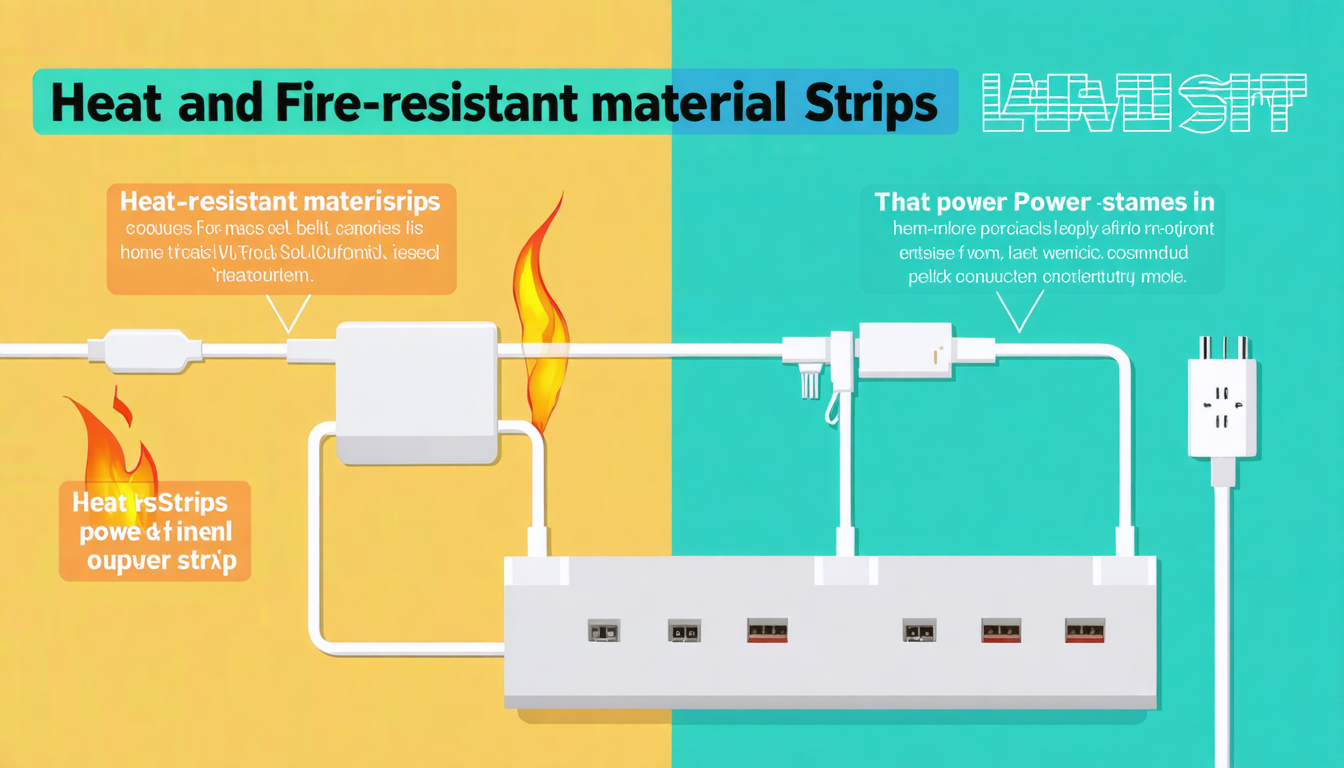
Importance of Heat and Fire Resistance in Power Strips
Power strips are used in a variety of environments, from households to industrial settings, where they are exposed to varying electrical loads. Overheating, electrical overloads, or faulty devices connected to the strip can cause excessive heat, leading to the potential risk of fire. The insulating materials used in power strips must be designed to withstand these stresses without igniting, deforming, or compromising their protective function.
Abnormal Heat
Abnormal heat refers to temperatures that exceed the normal operating range of electrical components, typically caused by prolonged high loads, short circuits, or poor ventilation. Insulating materials must remain stable and functional under these conditions to prevent damage to the electrical components and minimize the risk of fire.
Fire Resistance
Fire resistance in insulating materials is crucial to ensure that, in the event of an electrical fault, the power strip does not contribute to the spread of fire. Fire-resistant materials are designed to resist ignition and limit the spread of flames, providing valuable time for users to disconnect the strip and eliminate the source of danger.
Testing and CE Standards
Power strips that are sold within the European Union must comply with CE marking requirements. The CE marking indicates that the product conforms to all relevant health, safety, and environmental protection standards for products sold within the EU.
The standards governing the resistance of insulating materials to heat and fire are primarily covered by the IEC (International Electrotechnical Commission) 60884-1 standard, which is incorporated into the CE certification process.
Key CE Standards and Tests
-
IEC 60884-1: Plugs and Socket-Outlets for Household and Similar Purposes
- Glow Wire Test (IEC 60695-2-10): This test is designed to simulate the effect of overheating caused by a fault. During the test, a heated wire (usually at temperatures of 650°C, 750°C, or even 850°C) is applied to the insulating material of the power strip. The material must not ignite or must self-extinguish quickly, ensuring it does not contribute to the spread of flames.
- Ball Pressure Test: This test evaluates the heat resistance of the insulating material by applying pressure to the material at elevated temperatures (125°C for 1 hour). The deformation caused must be minimal to confirm that the material can withstand abnormal heat without losing its protective properties.
- Resistance to Fire: This test examines how the insulating material responds to direct exposure to flames for a set period, ensuring that the material does not sustain ignition or, if ignited, does not propagate the flame.
-
IEC 60335-1: Safety of Household and Similar Electrical Appliances
- Flammability Rating: Insulating materials used in power strips must meet a minimum flammability rating to comply with this standard. Materials such as Polycarbonate (PC) often meet this requirement due to their inherently flame-retardant properties.
Materials Commonly Used in Power Strips
1. Polypropylene (PP)
- Resistance to Heat: PP is a thermoplastic that can handle moderate temperatures, but may require flame-retardant additives to pass strict fire safety standards.
- Resistance to Fire: Without additives, PP has lower flame resistance than some other materials. However, treated PP can meet CE requirements for fire resistance if tested under IEC standards.
2. Polycarbonate (PC)
- Resistance to Heat: PC is highly resistant to heat, capable of withstanding elevated temperatures without deforming or losing structural integrity.
- Resistance to Fire: PC is inherently flame-retardant, making it an ideal choice for power strips. It can meet the most stringent CE standards for fire safety without the need for additional treatments.
Benefits of Using Heat and Fire-Resistant Materials
- Enhanced Safety: Insulating materials that can withstand abnormal heat and resist fire contribute significantly to the overall safety of the power strip, reducing the risk of fire hazards.
- Compliance with CE Standards: Meeting CE safety standards ensures that the power strip is legally compliant in the European market and adheres to strict safety and quality guidelines.
- Increased Durability: Materials that resist heat and fire are generally more durable, extending the lifespan of the power strip and protecting connected devices.
Conclusion
The resistance of insulating materials to abnormal heat and fire is an essential safety feature in power strips. To ensure maximum protection, power strips must comply with CE standards, particularly those outlined in IEC 60884-1 and related tests such as the Glow Wire Test and Ball Pressure Test. Materials like Polycarbonate (PC) and treated Polypropylene (PP) are commonly used due to their ability to meet these rigorous standards, providing peace of mind for consumers and businesses alike. By choosing a power strip with CE certification, you can be assured of its compliance with essential safety requirements, ensuring its safe use in a variety of environments.