
Childproof Power Strips: What Parents Should Look For

When I became the “chief safety officer” of our home (also known as mum/dad), I quickly learnt this: curious little hands find sockets. A childproof power strip1 isn’t a luxury—it’s a quiet bodyguard for busy rooms. Here’s the simple, practical guide I share with every parent friend.
Why Childproof Power Strips Are a Must-Have in Every Home

- Tiny explorers, big risks: Coins, toys, and fingers don’t belong near live contacts—ever.
- Hidden trip hazards: Loose bricks and spaghetti cables invite pulls and tumbles.
- Surge + overload events: Spikes and overloading can overheat plastics and cords if protection is poor.
- Peace of mind: Child-safety shutters and honest protection let you focus on, well, parenting.
Safety first rule: high-watt appliances (heaters, kettles, hair dryers) go directly into a wall outlet—never a strip.
Key Safety Features to Look For in Childproof Power Strips
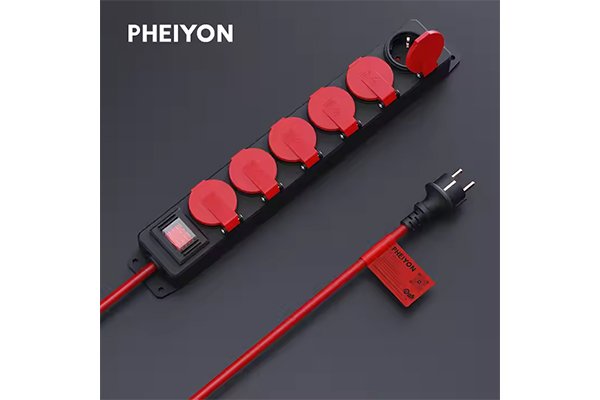
1) Tamper-Resistant (TR) / Child-Safety Shutters2
- Two-point insertion required; blocks single-pin probing (like a paperclip).
- In Europe, look for shuttered Type E/F or child-proofed sockets; in the UK, BS-style shuttered outlets; in the US/CA, TR-marked.
2) Overload & Over-temperature Protection3
- Resettable breaker that trips at rated current (e.g., 10A/13A/15A by region).
- Thermal protection to prevent slow, hidden overheating.
3) Surge Protection4 (for electronics)
- A clearly stated joule rating (e.g., 1,000–2,000 J) and a “Protected” LED.
- Thermal disconnect on MOVs for a safe end-of-life.
4) Fire-safe Materials & Build5
- Flame-retardant housing (often UL94 V-0 in datasheets).
- Solid earth path and tight socket grip; strain-relieved cord.
- Flat/angled plug (harder to lever out), low-profile body, mounting keyholes for wall/under-desk use.
- Cord length that reaches without coiling (1.5–2.0 m suits most playrooms).
- CE/UKCA for EU/UK, UL/ETL for US/CA, RoHS materials. Smart models should also show EMC/FCC/RED compliance.
Feature quick-check
| Safety Need | What I Look For | Why It Matters |
|---|---|---|
| Anti-poke | TR shutters / child-proof outlets | Blocks single-pin insertion |
| Overload | Resettable breaker + thermal | Stops silent overheating |
| Surge | Joule rating + “Protected” LED | Safeguards TVs, consoles, baby cams |
| Materials | UL94 V-0 housing | Fire behaviour under stress |
| Fit | Flat plug, keyholes, right cord | Fewer tugs, tidier routing |
| Compliance | CE/UKCA / UL/ETL + RoHS | Trustworthy design & factory controls |
How to Properly Use and Maintain Childproof Power Strips

- Mount off the floor if possible—under a desk, on a skirting board, or behind furniture (ventilated).
- Keep out of reach and sightlines; route cables through clips or trunking.
- No daisy-chains: never plug a strip into another strip or into a long extension lead.
- Mind the load: add up watts; stay below the printed rating (leave headroom).
- Ventilation: don’t cover with rugs, blankets, or stuffed toys.
- High-watt items → wall outlet: heaters, irons, hair dryers, kettles.
- Monthly glance: feel for unusual warmth; check for scorch marks or wobbly sockets.
- LEDs tell a story: if the “Protected” light goes out, replace the surge model.
- Cable health: no crushed or bitten insulation; replace at first sign of damage.
- Timeline: replace heavy-use surge strips every few years or per manufacturer guidance.
Kid-proofing extras
- Label each outlet (TV, console, router) so carers and grandparents don’t reshuffle power by guesswork.
- Use shorter cables to reduce loops and playful pulls.
HOWDY’s Commitment to Family Safety: Tested and Certified Childproof Designs
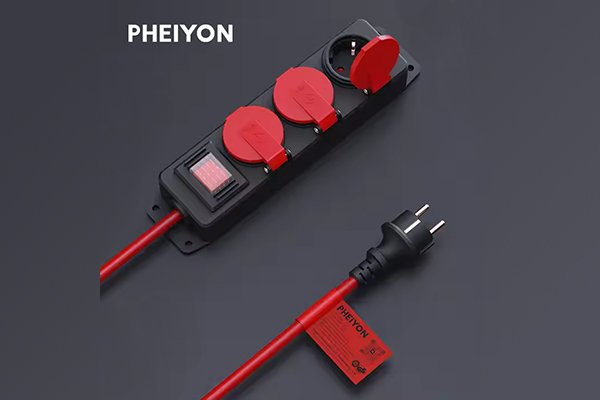
At Howdy (China), we build power strips, cable reels, extension cords, adapters, plugs & couplings for B2B wholesale, OEM, and ODM. Families and schools are a big part of our brief, so we design with child safety first.
What we build into our child-conscious ranges
- Tamper-resistant shutters for regional socket types (EU/UK/US variants).
- Overload breaker + thermal protection; cool-running copper contacts and firm socket retention.
- Surge options (≈1,000–2,000 J) with thermal MOV disconnect and clear Protected LED.
- Flame-retardant housings (target UL94 V-0) and robust strain relief.
- Mount-friendly bodies (keyholes/slots) and flat plugs to reduce tugging.
- Compliance packs: CE/UKCA (EU/UK), UL/ETL (US/CA), RoHS materials, with complete DoC and label files for audits.
- Design support (OEM/ODM): cord length, colourways, iconography, child-safe messaging, and packaging for retail or school procurement.
- 20+ years factory experience: 100% hi-pot/earth tests, AQL inspections, and routine thermal/temperature-rise checks.
If you’re outfitting a family brand, nursery, or school programme, tell me your plug type, cord length, and whether you want surge protection. I’ll map a compliant spec and sampling plan.
Parent’s One-Page Checklist11 (print this)
- [ ] Tamper-resistant shutters (TR) / child-proof outlets
- [ ] Overload breaker + thermal protection
- [ ] Surge rating shown (≥1,000 J) + Protected LED
- [ ] Flame-retardant housing, firm socket grip, flat plug
- [ ] Right cord length (1.5–2.0 m) + mounting keyholes
- [ ] CE/UKCA or UL/ETL + RoHS clearly marked
- [ ] Placed off the floor, no rugs/blankets over it
- [ ] No daisy-chains; high-watt appliances into wall outlets
Conclusion
Childproof power strips don’t replace supervision—but they buy you safety margin and peace of mind. Pick shutters, overload + surge protection, flame-safe materials, and honest certifications. Mount it well, keep it tidy, and your home becomes friendlier for the smallest (and fastest) people in it.
-
Explore the advantages of childproof power strips to ensure safety in homes with children. ↩
-
Learn how TR shutters enhance safety by preventing accidental insertion of objects. ↩
-
Understand how these features prevent overheating and potential hazards. ↩
-
Discover the significance of surge protection in safeguarding your valuable electronics. ↩
-
Find out which materials ensure fire safety in power strip construction. ↩
-
Explore design elements that enhance safety and usability for families. ↩
-
Learn about essential certifications that guarantee safety and compliance. ↩
-
Get tips on optimal placement to maximize safety and accessibility. ↩
-
Discover daily practices that help maintain the safety of power strips. ↩
-
Learn maintenance tips to ensure your power strips remain safe and functional. ↩
-
Access a handy checklist to ensure your power strips meet safety standards. ↩