
How Many Devices Can You Safely Plug into a Power Strip?
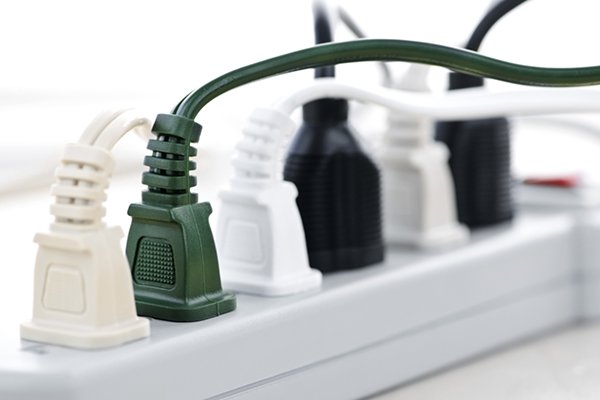
We’ve all been there—trying to charge a phone, run a laptop, and plug in a desk lamp, all at once. That’s when the power strip1 becomes a hero… or a hazard.
Most standard power strip1s can handle up to 1,800 watts (in the U.S.) or 3,680 watts (in Europe) of total load, depending on voltage and amperage. But the real answer depends on what you’re plugging in.
Let’s walk through what you really need to know to stay safe—and avoid frying your gear.
Understanding Power Strip Ratings: Amps, Watts, and Maximum Load
When we talk about how many devices you can plug in, what we’re really asking is: How much power can this strip safely handle?
A power strip1’s maximum load2 is determined by its amperage and the voltage in your country. For example, a 15-amp power strip1 at 120V (U.S.) can handle up to 1,800W. At 230V (Europe), it can go up to 3,450W.

Power Rating Basics:
| Region | Typical Voltage | 15A Power Strip Max Load |
|---|---|---|
| United States | 120V | 1,800W |
| Europe | 230V | 3,450W |
| UK (13A plugs) | 230V | 2,990W |
Formula:
Watts = Volts × Amps
So, when you see “10A 250V” on a power strip1, it means the maximum load2 is 2,500W. Go over that, and you risk overheating or a fire.
Common Mistakes People Make When Using Power Strips
Even with good specs, people misuse power strip1s all the time—usually without even realizing it.
One of the biggest mistakes is plugging in too many high-power devices like heaters, microwaves, or hair dryers, which can easily overload the strip.
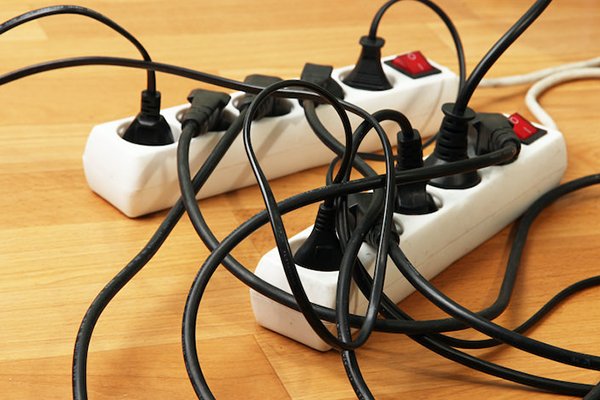
Watch Out for These Pitfalls:
- “Daisy-chaining” power strip1s (plugging one strip into another)
- Using a power strip1 for appliances like refrigerators or AC units
- Overloading with multiple chargers that draw full power simultaneously
- Placing the strip under rugs or in drawers, which traps heat
- Ignoring the power rating label3 on the strip
| Mistake | Why It’s Risky |
|---|---|
| Daisy-chaining strips | Doubles the load and can cause fire |
| High-wattage appliances | Exceeds load limit quickly |
| Using outdoors (non-rated) | Risk of water damage, shock, short circuit |
If it gets hot to the touch, makes buzzing sounds, or smells odd—unplug it immediately.
How to Calculate Safe Load Capacity for Your Devices
It’s not about how many plugs the strip has—it’s about how much power your devices draw.
To stay safe, add up the wattage of each device you plan to plug in, and make sure it’s under the strip’s rated max.

Example Scenario:
Let’s say you want to plug in:
- Laptop: 65W
- Monitor: 30W
- Phone charger: 15W
- Desk lamp: 40W
- Printer: 200W
Total: 350W — You’re well within safe limits on a 1,800W power strip1.
| Device | Wattage |
|---|---|
| Coffee Maker | ~1,200W |
| Space Heater | ~1,500W |
| Gaming PC | ~600–800W |
| Smartphone | ~15W |
| Hair Dryer | ~1,000–1,500W |
Rule of thumb: Never go above 80% of the strip’s max capacity. For a 1,800W strip, stay under 1,440W to be extra safe.
Safety Tips for Using Power Strips at Home, Office, or Workshop
Now that you know the numbers, let’s keep it practical. Power strips are super useful—but only when used the right way.
Good power strip1 habits can prevent short circuits, tripped breakers, or even fires.

Smart Safety Habits:
- Use surge-protected power strips4](https://www.reddit.com/r/explainlikeimfive/comments/4bh2ir/eli5_how_exactly_does_a_power_strip_work/)[^1]s for electronics like PCs, TVs, routers
- Never exceed 80% of the rated load
- Label your plugs if using multiple devices with similar shapes
- Don’t hide strips under rugs or furniture—they need ventilation5
- Use outdoor-rated strips for workshops or garden equipment
- Replace old or damaged power strip1s every 3–5 years
| Tip | Why It Matters |
|---|---|
| Surge protection | Shields devices from voltage spikes |
| Heat ventilation5 | Prevents overheating and potential fire |
| Grounded plugs (3-prong) | Improves safety for higher-wattage devices |
| CE/UL/ETL certified products | Ensures tested safety standards are met |
At How-dy, our power strip1s are CE-certified6 and tested to meet these safety expectations—because peace of mind matters just as much as power.
Conclusion
So, how many devices can you plug in? It depends on their total wattage—not just the number of outlets. Stay within the rated load, avoid common mistakes, and always check the specs. Power strips are a great tool—but only if we use them wisely.
-
Understanding the basics of power strips can help you use them safely and effectively. ↩ ↩ ↩ ↩ ↩ ↩ ↩ ↩ ↩ ↩ ↩ ↩
-
Knowing how to calculate maximum load ensures you avoid overloading and potential hazards. ↩ ↩
-
Knowing how to read power rating labels is crucial for safe usage. ↩
-
Surge protection can save your electronics from damage due to voltage spikes. ↩
-
Proper ventilation prevents overheating and reduces fire risks. ↩ ↩
-
CE certification ensures that the power strip meets safety standards. ↩